domingo, 1 de octubre de 2017

Mercury pollution watchdog to set up in Geneva

Geneva will play host to the body responsible for implementing a global convention to reduce mercury pollution. Some 150 countries voted in favour of the Swiss city at the first conference of the Minamata Convention on Mercury, which was also staged in Geneva.

The conference also agreed on a range of measures to limit the impact of mercury extraction and industrial usage. This included guidelines to regulate artisanal gold mining and the reduction of mercury emissions. Another guideline specifies how the atmospheric mercury emissions generated by coal-fired power plants, waste incineration plants and cement plants can be reduced.

Switzerland is an important legal trader in mercury and recycler. Switzerland exported 30 tonnes of mercury last year - down from 110 tonnes per year between 2011-2015 - the government said in June.

Geneva is a centre of expertise for hazardous chemicals and waste. It is already home to the secretariats for the Stockholm Convention on Persistent Organic Pollutants (POP), the Rotterdam Convention on the Prior Informed Consent Procedure for Certain Hazardous Chemicals and Pesticides in International Trade, and the Basel Convention on the Control of Transboundary Movements of Hazardous Wastes and Their Disposal.

On Saturday, at the end of a six-day conference, the Minamata Convention's secretariat was added to the list of agencies that Geneva will host.

Regulation changes

"The arrival of the Secretariat of the Minamata Convention will be a boost for Geneva as center of the international environment governance," said Marc Chardonnens, Director of the Federal Office for the Environment.

"The measures for reducing mercury emissions that pose a risk to health and the environment can begin," he added.

The Swiss government is expected to lay out its position by the end of the year on how to amend legislation to match the convention's objectives of reducing pollution. It will have to steer a line between environmental groups advocating a complete ban on mercury trading and the industry that is lobbying against strict regulation.

The Minamata Convention, named after a Japanese fishing town where mercury was discharged into the bay by a large chemical company between 1932 and 1968, entered into force on August 16, 2017. It was initiated by both Switzerland and Norway. So far, 79 states have ratified the convention, including the United States, China, Brazil, Indonesia, Peru and Switzerland (on May 26, 2016).

Mercury

Mercury is a highly toxic heavy metal considered by the World Health Organization to be one of the top ten chemicals of major public health concern.

The chemical element occurs naturally and can be released into the environment via the weathering of mercury-containing rocks, forest fires, volcanic eruptions or geothermal activities. But according to the United Nations, 90% of the 5,500-8,900 tons of mercury currently emitted or re-emitted each year to the atmosphere is man-made. It is released unintentionally from industrial processes such as coal-fired power stations, cement production, mining, waste incineration, and metallurgic activities.

Mercury is extensively used to extract gold from ore in artisanal and small-scale gold mining. It is contained in electrical switches, relays, measuring control equipment, fluorescent light bulbs, batteries and dental amalgam. Mercury is also used in laboratories, cosmetics, pharmaceuticals, vaccines, paints and jewellery.

jueves, 13 de julio de 2017

Mercury-Free Gold: How You Can Protect The Future By Buying This Ethical And Sustainable Jewellery

Gold mining’s association with poor health and environmental damage has been unearthed over the years - but it’s still something many of us know little about.

“People have heard about ‘blood diamonds’, but not many realise that their gold could be responsible for one of the world’s top toxic threats – mercury,” says Richard Fuller, the President of Pure Earth – a New York-based charity that helps to clean up pollution in the poorest communities in developing countries that are affected by toxins.

Mercury poisoning can cause many unpleasant symptoms including brain malfunction, slurred speech, memory loss and loss of balance.

Artisanal small-scale gold mining is the largest source of human-caused mercury pollution in the world (even more than the burning of fossil fuels), according to the International Development Research Centre (IDRC).

Gold has long been coveted. But as our lust for the material goes unabated the industry has been steeped in accusations of exploitation, child labour and poor wages.

In turn, artisanal and small-scale gold mining (ASGM) has attempted to provide an ethical overhaul by implementing hallmarks for Fairtrade and Fairmined gold to guarantee a more ethical process.

And now a spotlight has now fallen on mercury-free gold – and it’s jewellery designers who are helping to lead the way.

Miner in Burkina Faso mining for mercury-free gold.

One such designer is Kimberly McDonald, a fine jewellery designer based in New York City, US. From gemstones to diamonds and metals, she consistently demands traceability for every material she uses within a piece of jewellery.

“In this market it is no longer enough to have a beautiful one-of-a-kind product,” she told HuffPost UK.

“People want to feel comfortable with the knowledge that what they spend their money on does not come at a larger cost to the planet.

“As a brand, Kimberly McDonald could not knowingly produce pieces that originate from something that is destructive to the environment.

“We also have seen increasing interest from our clientele about how the materials we use are mined and where our pieces are manufactured.”

Gold mines are mainly situated in developing countries – such as Nigeria, Burkina Faso and Indonesia – and they can be a dangerous environment to work in.

Due to a lack of high-tech equipment available in artisanal and small-scale gold mining (ASGM), the danger here can be even higher due to the use of toxic chemicals like mercury to extract the gold.

Mercury use in Nigeria.

“The largest source of global mercury emissions comes from artisanal gold mining, which produces up to a quarter of the world’s gold,” said Fuller.

“Because mercury travels, it is everyone’s problem. From poor miners and their communities who are directly poisoned, to families eating contaminated fish living half a world away.

“But the good news is that we are all part of the solution.”

The detrimental effects of mercury on the human body can be extensive.

“We’ve learned a lot about how this mercury effects us and our children from reported exposures to mercury over the last 100 years,” wrote physician Mark Hyman, in a blog hosted on HuffPost in 2011, entitled ‘Mercury: How To Get This Lethal Poison Out Of Your Body’.

“The symptoms and diseases these exposures have caused are varied and mimic many other conditions. Nervous system toxicity can cause erethism (‘mad hatter syndrome’) with symptoms of shyness; laughing, crying, and dramatic mood swings for no apparent reason; nervousness, insomnia, memory problems, and the inability to concentrate.

And the list continues: “Other neurologic symptoms may include encephalopathy (non-specific brain malfunction), nerve damage, Parkinsonian symptoms, tremor, ataxia (loss of balance), impaired hearing, tunnel vision, dysarthria (slurred speech), headache, fatigue, impaired sexual function, and depression.”

An amalgam of mercury mixed with gold.

The process involved in using mercury to extract gold has been linked to causing health issues for miners. According to a report by The Artisanal Gold Council (AGC), 10 to 15 million people are directly involved with ASGM.

However, sourcing a strong statistic of how many people are truly involved in ASGM hasn’t been easy.

“Estimating the number is not a simple task because it is largely an informal or poorly understood economic sector - often with little government contact and occurring in many remote regions,” explains Dr Kevin Telmer, executive director of Canada’s Artisanal Gold Council - who work to improve the health, economy an environment in AGSM.

“ASGM is a big and important livelihood. It’s a 20 billion dollar primary economy.

“It is practiced directly by 10 million people and supports a population of 100 million people in more than 80 countries.

“Every time we have had the opportunity to look more closely and collect more robust information, the estimate has risen.

“This is not because there are necessarily more and more people involved but also because of better information and understanding.”

Due to a lack of high-tech equipment, miners may use a dangerous method for extraction: the process of amalgamation – which is when gold comes in contact with mercury and the two mix to form a compound called an amalgam.

After the gold dissolves into the mercury, small gold particles are left. During this process, the burning of mercury releases harmful chemicals into the air which are not only toxic for humans, but also the environment and wildlife.

But changes are being made for a safer process.

“The biggest development to change the practice of using mercury to mine gold is the Minamata Convention on mercury - a UN Environment treaty signed by the world’s governments,” explains Dr. Kevin Telmer.

“Under the Minamata Convention, countries have agreed to introduce mercury-free technology to assist artisanal and small-scale miners to use alternative and more profitable techniques.

“This serves the double purpose of eliminating mercury pollution while still providing what is broadly recognised by world bodies as an important livelihood supporting around 100 million poor people in more than 70 countries.”

Shaking table introduced by AGC in Burkina Faso to recover gold without the use of mercury.

But with consumers – specifically millennials - demanding change, some jewellery designers are already actively sourcing mercury-free gold.

Kimberly McDonald is not the only designer who shares that pioneering mindset.

Pamela Love, a fine jewellery designer from New York City, has visited Suriname in South America to meet with their government and policy makers – who are working to restructure their gold mining industry.

“In Suriname, there were medium scale mines and small scale artisanal mines who were working in the rainforest and releasing mercury into the environment,” explained Love.

“The goal was, and is, to move these artisanal miners out of the virgin rainforest and into areas that are zoned for gold mining.

“They also are working to educate small-scale miners on the dangers of mercury in gold mining, to their health, as well as to the rainforest, and provide them with alternative methods of mining that are safer for them, the environment and ultimately yield more gold.

“This type of education is so important to our health, and our planet’s health.”

Artisanal gold produced in Burkina Faso.

A jewellery manufacturer – who wishes to remain anonymous - explained to HuffPost UK the need for traceability – from mine to manufacturer.

“To ensure that we are actually using mercury-free gold, as a manufacturer, we use suppliers that are independently certified,” the manufacturer explained.

″We work with vendors that have received certifications from their suppliers, verifying that they only source and manufacture metals and alloys from ‘DRC-Conflict Free’ mines or other domestic U.S. Sources.

“Mercury-free techniques to recover gold are safer for miners, their families and local communities.

“Mercury-free may also help miners market their gold at higher prices as awareness and consumer requests grow. Many are becoming ‘Fairminded-Certified’.

“Being a small manufacturer, we source our raw materials (precious metals, diamonds and gemstones) from suppliers that are certified. Design, assembly and finishing are done at our facility.

“As jewellers it is important for us to use more sustainable and ethical materials as it not only protects the environment, but also has a positive impact on the communities and lives of workers.”

Artisanal small-scale gold mining provides families with an opportunity to escape poverty. To completely remove or halt the process would be ineffective.

What miners need is access to better technology and working conditions. It is possible to create beautiful pieces of jewellery in a way that isn’t harmful to our planet and people.

“With Pure Earth, the UN and other organisations are training artisanal miners to go mercury-free, and with consumers and the industry demanding mercury-free artisanal gold, we will begin to see a difference,” concluded Fuller.

viernes, 21 de abril de 2017

Autorizan ingreso de las FF.AA. a Madre de Dios para luchar contra minería ilegal

Por la Resolución Suprema suscrita por los ministros del Interior, Carlos Basombrío y de Defensa, Jorge Nieto, el Gobierno Central autorizó el ingreso de las Fuerzas Armadas (FF.AA) a la región de Madre de Dios para apoyar a la Policía Nacional en su lucha contra la minería ilegal.

La autorización busca que las fuerzas militares brinden apoyo a los efectivos policiales frente a las movilizaciones que los mineros ilegales han anunciado para los próximos días. El permiso será por 30 días desde hoy viernes 21 de abril.

En la resolución se explica que en todo momento será la Policía Nacional la responsable de mantener el control del orden interno en Madre de Dios, agregando que la presencia de las FF.AA. será solo de apoyo.

“La actuación de las FF.AA. estará dirigida a contribuir y garantizar la plena vigencia del derecho a la libertad y seguridad personales, a la libertad de tránsito por las vías y carreteras (…), facilitando de este modo que los efectivos de la Policía Nacional concentren su accionar en el control del orden público”, señala la resolución publicada en El Peruano

domingo, 9 de abril de 2017

Peru wants to sell dirty smelter but has to lower air standards

La Oroya - Peru's La Oroya polymetallic smelting plant has been for sale since the company who owned it went bankrupt in 2009. So Peru is proposing to loosen air quality standards in some parts of the country to attract buyers, despite the plant's dirty past.

The decision by the Andean country's Environment Ministry late Saturday is actually nothing new. In January 2017, a proposed auction of the La Oroya smelter, supported by President Pedro Pablo Kuczynski, drew the interest of five companies.

But the interested parties were turned off by Peru's air quality standards. At the time, the prospective buyers were aware of the possibility of changes to the regulations and decided to hold off on bidding until they could see for themselves what would come of the new standards.

However, according to Reuters, the government's new proposal is serious and would include changing several parts of the country's environmental quality standards, including raising the sulfur dioxide emission limit to levels in line with other countries in the region including Chile, Colombia, and Mexico.

The country is desperate to sell the plant, as well as a small copper mine. The government is planning a new series of auctions before an August deadline for selling the facility. The proposed standards have been pre-published and are now open for a 10-day public comment period.

Of course, the proposed standards change does not mention the need to sell the smelter, but to some environmentalists, it looks like Peru is putting the environment second over economic growth, something President Trump has done in the United States.

Pollution problems with the La Oroya smelter

La Oroya was bought by Doe Run, (whose parent company was The Renco Group, Inc.), in 1997 for US$247 million. The company also bought a small copper mine, the Cobriza copper mine, south of La Oroya, for US$7.5 million. Until Doe Run took bankruptcy in 2009, they owned 99.97 percent of La Oroya.

La Oroya was made up of a copper and lead smelter and zinc refinery. The plant also dealt with 'dirty concentrates' produced by a number of local mines They included gold and silver, antimony, arsenic trioxide, bismuth, cadmium, indium, selenium, tellurium, sulfuric acid, and oleum.

Under the leadership of its coordinator, Congressman Casio Huaire Chuquichaico, the Junin Parliamentary Group held a meeting in which legislators expressed concerns about the Doe Run case affecting the population of La Oroya and the modernization of the Jauja airport. (Translation by Google Translate). Congreso de la República del Perú

Problems started right away with Doe Run. Until their purchase of the company, La Oroya had been run without any concern for the environment, and consequently, the landscape around the plant looked like a moonscape because of the sulfur dioxide residues.

Doe Run signed an environmental contract with the government that gave them 10 years to install remediation measures to curb emissions from gasses, particulates, and polluted water and clean up around the smelter and its waste dumps. Well, it never happened.

jueves, 30 de marzo de 2017

EE.UU., puerto final del oro ilegal peruano


El encarcelamiento de dos peruanos, acusados de lavado de activos, fue el inicio de una extensa y complicada red de comercio de oro ilegal cuyo principal comprador es una empresa metalúrgica de EE.UU.

Las capturas de Pablo Granda y Pedro David Pérez Miranda pusieron en evidencia una red de minería ilegalcuyo principal comprador está a kilómetros, en EE.UU.

El Departamento de Seguridad estadounidense inició una investigación penal por compra de oro ilegal contra Northern Texas Refinery (NTR) explica a RT el periodista peruano Oscar Castilla, quien ha desarrollado una extensa investigación sobre la minería ilegal en su país.

Según los fiscales estadounidenses, trabajadores de NTR, entre los que se encontraba Granda, compraban oro, procedente de la Amazonía peruana, a minas ilegales, reseña 'Gestión' citando a Bloomberg.

El proceso revela además que la oficina de NTR en Miami presuntamente lavó miles de millones de dólares de las mafias que controlaban las minas, donde además hay trata de personas, daños ambientales y esclavización moderna.

"Soy como Pablo (Escobar) yendo a Ecuador para conseguir la coca“.
Pablo Granda, encarcelado por acusación de lavado de activos.

Debido a los movimientos y registro en la aduana estadounidense, el Departamento de Seguridad y el FBI consideran que hay "fuertes indicios" de que NTR inició sus operaciones en Perú en 2012.

La demanda contra esa empresa metalúrgica arroja que el contrabando de oro ilegal en varios países mineros de América Latina fue de 3.600 millones de dólares de 2012 a 2015.

"Por todos los miles de millones de dólares enviados desde América Latina a NTR en Miami, NTR envió miles de millones de dólares en pagos electrónicos a América Latina desde Estados Unidos", escribió Colberd Almeida, del Departamento de Seguridad, en una declaración jurada del 10 de marzo.

NTR ha cambiado de nombre y ha dejado de operar en Perú, agregó Castilla.

Los tentáculos latinoamericanos

Los nombres de Pablo Granda y Pedro David Pérez Miranda saltaron al ámbito noticioso al conocerse las investigaciones que se les habían abierto y sus condenas a la cárcel por su relación con el enriquecimiento ilícito producto de la minería ilegal. Uno de los principales operadores de NTR en Perú era Granda, según Castilla.

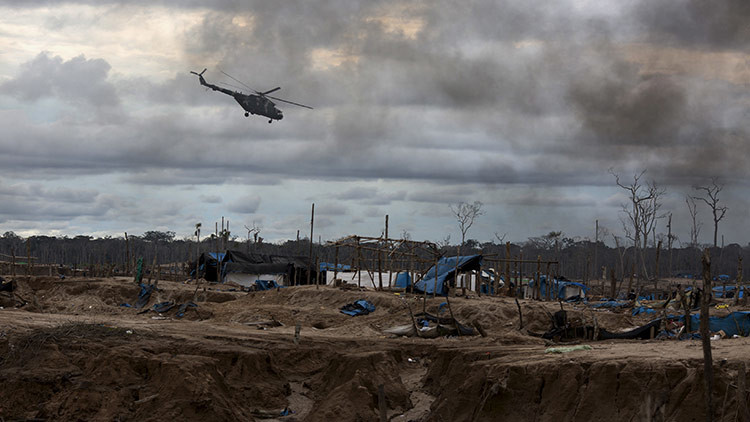
Un helicóptero patrulla durante una operación policial para destruir campos ilegales de extracción de oro en La Pampa, en Madre de Dios.Stringer PeruReuters

Granda fue detenido el 10 de marzo en Miami bajo la acusación de lavado de dinero en EE.UU., reseña 'Perú 21'. Este hombre de 35 años, debe demostrar ante la aduana la información falsa que proporcionó, en la que declaraba el oro en su poder como 'no refinado', lo que disminuía el valor en 50%.

Según la investigación, se alió a dos vendedores de NTR y otras personas que sabían del tipo de negocio irregular que llevaba a cabo.

"Crimen organizado, contrabando de oro e ingreso de mercancías en EE.UU. por medios y declaraciones falsas, minería ilegal, y narcotráfico", escribió Almeida citado por Bloomberg.

Las pesquisas policiales arrojan que Granda trabajaba directamente en las selvas de América del Sur, donde operan la minería ilegal y sus mafias.

El 'Pablo Escobar moderno'

Granda se autodenominó como el 'Pablo Escobar moderno', según la información cifrada hallada en los mensajes de un chat de celular que tenía con sus cómplices.

"Soy como Pablo [Escobar] yendo a Ecuador para conseguir la coca", recoge su expediente judicial y cita 'El Comercio'.

Perú: La política, bañada de oro ilegal

Entre las comunicaciones también hallaron comentarios y fotos sobre sus 'mulas' de oro, que correspondían a jóvenes que transportaban el metal precioso en mochilas.

La forma de captación de los potenciales clientes se basaba en relaciones, visitas a NTR para ver las instalaciones y promesas de obtención del oro en menos tiempo que otras refinerías, arrojó la causa penal.

Posteriormente se hacía el comercio ilegal a través de muchas empresas falsas que exportaban el oro en pequeñas cantidades a una corporación más grande.

'Peter Ferrari'

Tras la detención de Granda, se hallaron evidencias que vinculaban a Pedro David Pérez Miranda, alias 'Peter Ferrari' con el contrabando de oro proveniente de Madre de Dios, en la Amazonía peruana.

Pérez Miranda, capturado el pasado 4 de enero por fuerzas policiales en Lima, es investigado por "presuntamente haber exportado de forma ilegal 14 toneladas de oro valorizadas en más de 660 millones de dólares" recoge 'Perú 21'.

En la amplia residencia de 'Peter Ferrari' encontraron ocho autos de lujo y armas de fuego. Además se hizo un allanamiento de 10 propiedades que presuntamente le pertenecían. La captura se realizó por orden de la Fiscalía de Lavado de Activos y Pérdida de Dominio peruana.

Oficiales de la policía peruana participan en una operación para destruir campos ilegales de extracción de oroJanine CostaReuters

Tras la pista

En mayo de 2014 la justicia peruana abrió la investigación contra 'Peter Ferrari' por lavado de activos, pues se detectó que empresas relacionadas con él habían exportado ilegalmente a compañías estadounidenses "más de 14 toneladas de oro por un valor de 660 millones de dólares, según consta en la Carpeta Fiscal Nº01-2014", informa 'Perú 21'.

Estas exportaciones se hicieron entre 2012 y 2013 a través de empresas falsas, a nombre de testaferros.

Luego de meses de pesquisa, la fiscalía estableció que 'Peter Ferrari' era "el presunto financista y cabecilla de una organización criminal dedicada a la exportación de mineral aurífero procedente de la minería ilegal" según 'Perú 21'.

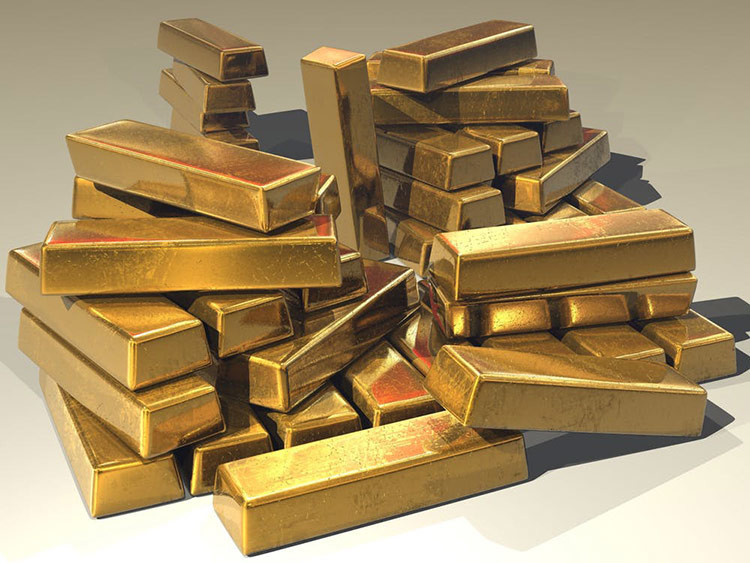
El oro salía ilegalmente de Perú, y se distribuía a través de empresas falsas hasta llegar a EE.UU.Pexels / Pixabay

El registro de la Unidad de Inteligencia Financiera y la Superintendencia Aduanera y Tributaria peruanas arrojó que la empresa Minerales La Mano de Dios, relacionada con Pérez Miranda, a través de testaferros y familiares, realizó "39 operaciones de exportación por 2,1 toneladas de oro por un valor de 107,5 millones de dólares" a NTR.

Además, la empresa Minerals Gold MPP SAC, relacionada también con Pérez Miranda, tuvo 40 operaciones de exportación de oro por 2,9 toneladas por 138 millones de dólares importadas por NTR.

Pérez Mirada ya había sido encarcelado en 1998 por lavado de dinero producto del narcotráfico. Después de cinco años de prisión fue liberado.

"El agua le ganó al oro": El Salvador prohíbe la minería metálica


El Congreso aprueba una ley que prohíbe las actividades de exploración, extracción, explotación y procesamiento, ya sea a cielo abierto o subterráneo

El país más pequeño de Centroamérica, El Salvador,aprobó este miércoles una ley que prohíbe la minería metálica, al considerar que es una industria que crea impactos negativos sobre el medio ambiente y la salud de las personas. "Hoy es un día histórico para El Salvador. Es un día histórico para el mundo entero",aseguró la ministra de Medio Ambiente, Lina Pohl, tras la votación.  

La nueva ley, aprobada con el voto de 69 de los 84 diputados, prohíbe las actividades de exploración, extracción, explotación y procesamiento, ya sea a cielo abierto o subterráneo. Además, pone fin a la utilización de químicos tóxicos, como el cianuro y el mercurio, en cualquier proceso de minería metálica.

Una medida para asegurar los recursos de agua

"Es un día importante para el país porque aprobamos la ley. La ley no es cualquier ley. Esta normativa está bañada con sangre", aseguró el presidente de la Comisión de Medio Ambiente y Cambio Climático, el diputado Guillermo Mata (FMLN), en referencia a todos los ciudadanos que "fueron asesinados por luchar contra la minería metálica, por defender el medio ambiente" y que denunciaron "que la minería era una industria de lucro que no beneficiaba a El Salvador".


Según datos de la ONU, el nivel de contaminación medioambiental en el país es uno de los más elevados de la región y la disponibilidad de agua potable es muy baja. "Hoy hemos visto más allá de los intereses partidarios, y tomamos una decisión unánime para asegurar las fuentes del agua. Es deber del Estado proteger los recursos naturales para garantizar el desarrollo sostenible del medio ambiente", afirmó el diputado John Wright Sol (ARENA), que subrayó: "¡Este día el agua le ganó al oro!"

La normativa se ha aprobado a pesar del interés en el oro y la plata de las mineras multinacionales. De hecho, el pasado mes de octubre, un tribunal de arbitraje del Banco Mundial dio la razón a El Salvador en un litigio contra la minera australiana-canadiense OceanaGold Corporation, que reclamaba al país 250 millones de dólares pornegarle un permiso de extracción en el 2009. Además, el organismo condenó a la minera a pagar ocho millones de dólares por los costos del litio y el pasado martes ordenó también a la compañía pagar los intereses sobre esa deuda.

sábado, 25 de marzo de 2017

Perú: La política, bañada de oro ilegal

Actualidad

Publicado: 25 Mar 2017 | 15:30 GMT

Reuters Janine Costa

A pesar del impacto negativo en el ámbito social y ambiental, la minería ilegal comienza a colarse en el escenario político de ese país.

La minería ilegal en Perú comienza a tener influencia en la política, afirma el exviceministro de Gestión Ambiental, José de Echave. El sector de la explotación minera ilegal, que ha causado daños en 17 áreas protegidas del país, "controla territorios, impone sus condiciones y tiene poder político", agrega.

Un gobernador y un congresista, con nexos en la minería ilegal

De Echave explica que tanto el gobernador como un congresista del departamento de Madre de Dios, en el sur del país y dedicado 90 % a la minería ilegal, tienen nexos públicamente conocidos con esa actividad ilícita.

El gobernador del departamento amazónico, Luis Otsuka (2015-2018), admitió tener dos concesiones de minería en la zona en una entrevista hecha por Ojo Público. Además fue presidente por dos años de la Federación de Mineros de Madre de Dios, tiene abierta una investigación por parte de la Fiscalía Especializada en Materia Ambiental y alentó protestas en contra de la legalización de los pequeños mineros en 2012 y 2014 según 'El Comercio'.

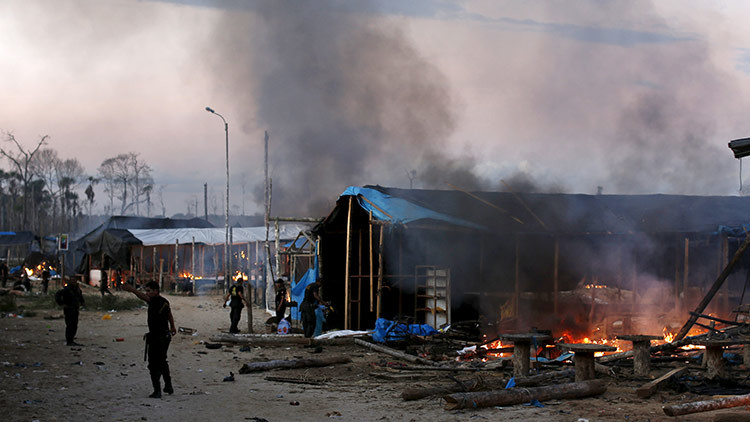
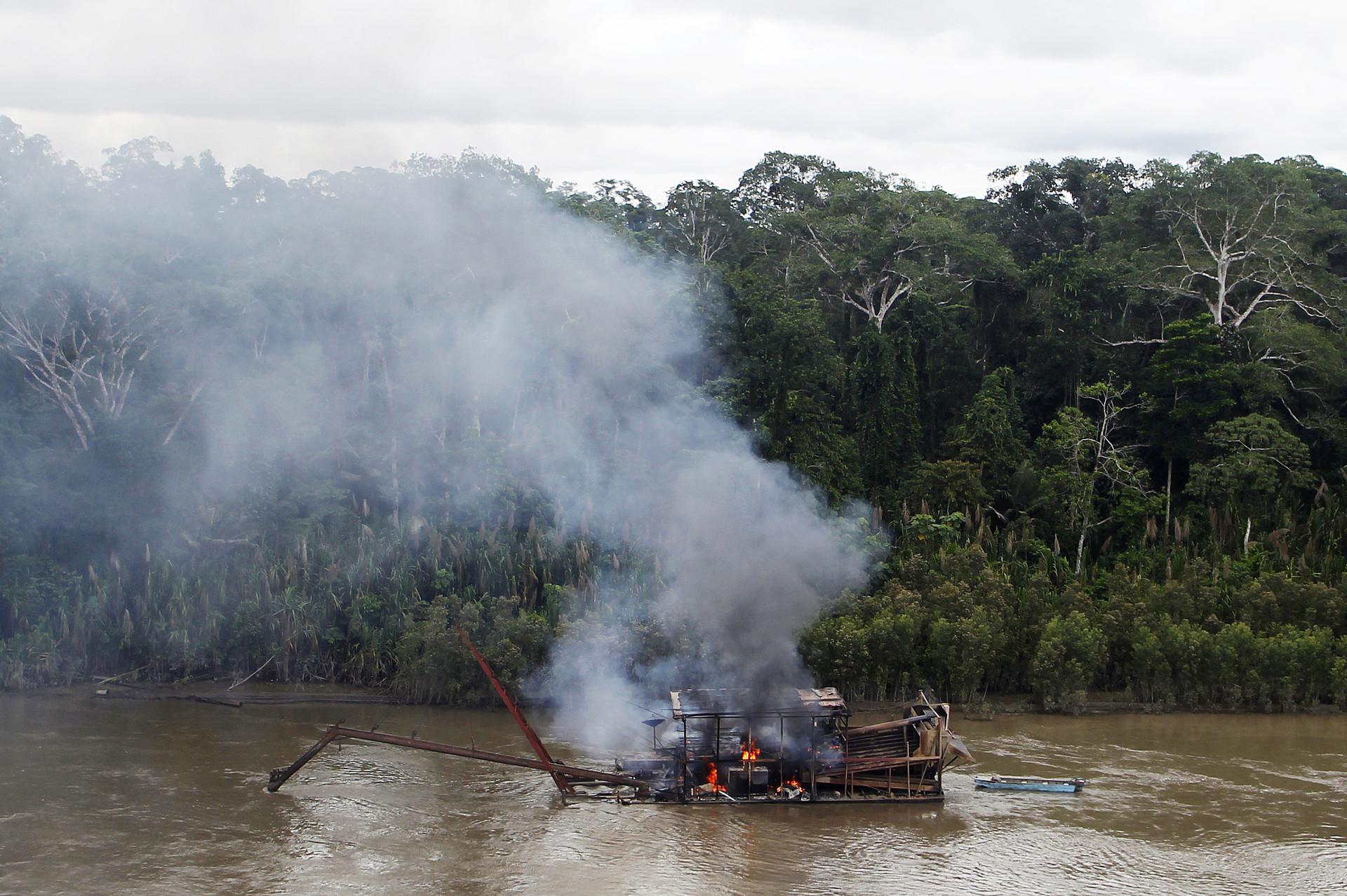
Una instalación ilegal de dragado de oro arde en un río cerca de la ciudad amazónica de Puerto Maldonado en PerúJanine CostaReuters

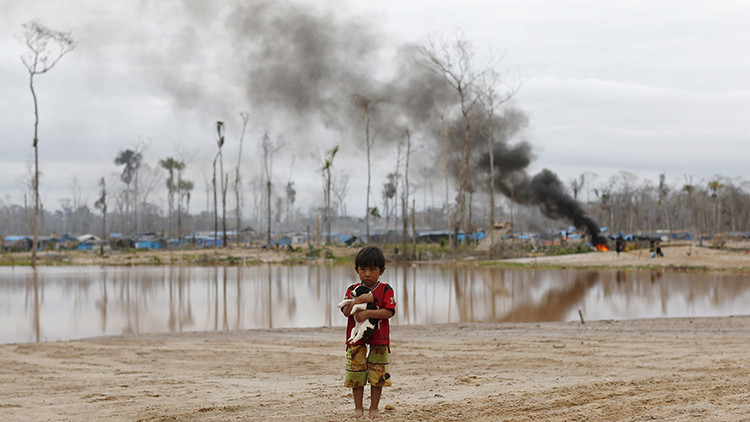
En esa región amazónica, que se han destruido 50.000 hectáreas (500 km) por la acción minera, el tema ambiental no pareciera ser la prioridad de su principal autoridad, quien se opone a la declaración de emergencia de 11 distritos de la región.

No son pobres, son mafias

"Deberíamos estar tan preocupados porque haya autoridades que han sido elegidas y que estén tan vinculadas a esa actividad ilegal", alerta De Echave.

El exviceministro considera que la opinión publica cree que la actividad ilícita, en las que participan unas 600.000 personas, según cifras no oficiales, es realizada por sectores empobrecidos que no tienen otra alternativa.

"No son pobres, son mafias que tienen poder económico, social, político; controlan los territorios e imponen condiciones muy duras", sostiene.

Un congresista del partido de Keiko

Modesto Figueroa Minaya (2016-2021), el único congresista del partido Fuerza Popular, de Keiko Fujimori, electo por Madre de Dios, fue denunciado por la Procuraduría Pública del Ministerio del Ambiente en 2014 ante la Fiscalía de Delitos de Lavado y Activos de ese país por el lavado de activos vinculados a la minería ilegal.

Según un documento legal publicado por el diario 'Correo', Figueroa Minaya tiene nexos con la familia Baca Casas, acusada de ser la principal productora de oro ilegal en Madre de Dios. "Existen fundadas sospechas para sostener que el denunciado brinda un especial servicio de comercialización de hidrocarburos para la minería ilegal, desplegando la conducta prevista en el tipo penal de Financiamiento de la Minería Ilegal", recoge el texto legal.

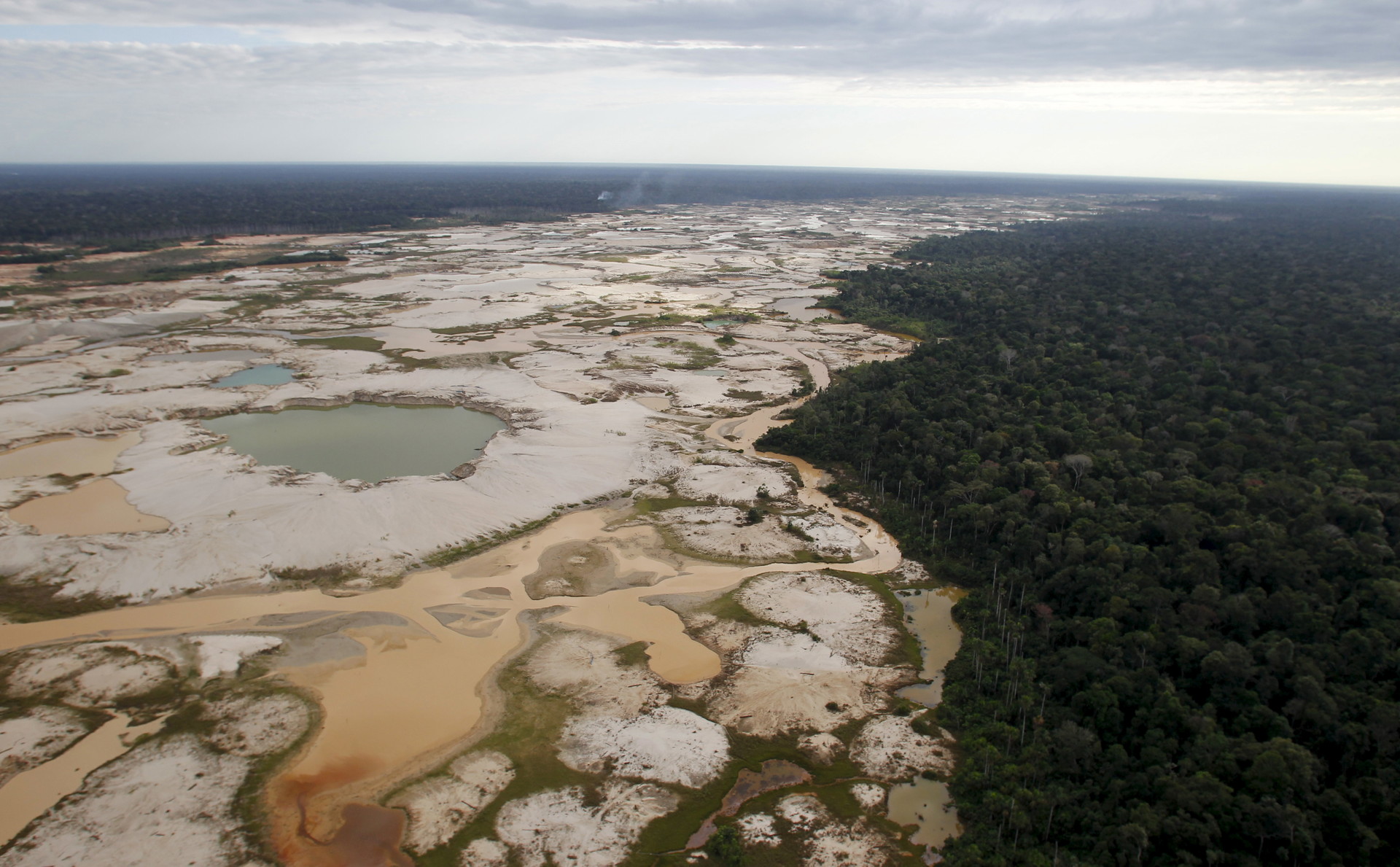
Un área deforestada por la minería ilegal en la zona Mega 14, ubicada en la región amazónica de Madre de Dios (Perú). Enrique Castro-MendivilReuters

La investigación abierta arroja además que Figueroa Minaya actúa como testaferro y comerciante de hidrocarburos del llamado clan Baca Casas.

También el protagonista del partido de Keiko Fujimori, que se enfrentó con el actual presidente Pedro Pablo Kuczynski en las pasadas elecciones de 2016, podría tener lazos con los mineros ilegales. Keiko "firmó un acuerdo, con fines electorales, con los mineros ilegales para desmantelar todas las leyes que los estaban afectando", expresa José de Echave.

Un marco legal desdibujado

En su opinión, las autoridades ligadas con la minería defienden sus intereses a través de "estrategias para tener poder político, y llegar al Congreso, donde se debaten las leyes".

De Echave considera que hay un retroceso en el aspecto legal, a pesar de que en 2012 se aprobó el Decreto Nº 1100, que incluyó en el Código Penal el delito de minería ilegal, y en 2010 se había declarado de interés nacional el ordenamiento minero en Madre de Dios.

"Ese marco legal, con el poder político que tienen, unido a que son un bolsón electoral importante, ha comenzado a retroceder, flexibilizarse y pienso que la minería ilegal difícilmente pueda ser controlada", concluyó el exviceministro.