martes, 22 de enero de 2019

Europa planea extraer regolito del cual se puede extraer agua y oxígeno, además de metales como el platino antes de 2025


La Agencia Espacial Europea se asoció a una empresa para investigar la posibilidad de una exploración.
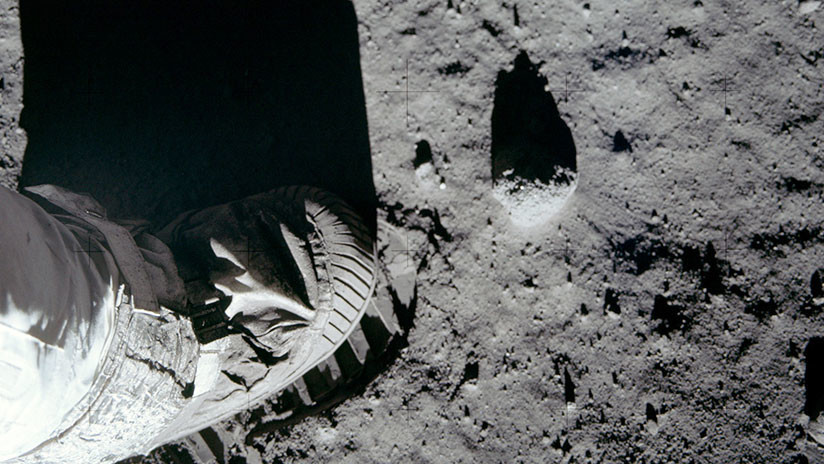
La empresa ArianeGroup ha firmado un contrato de un año con la Agencia Espacial Europea (ESA, por sus siglas en inglés) para estudiar la posibilidad de enviar una misión a la Luna antes de 2025, que tendrá como objetivo extraer regolito, informa la compañía en comunicado de prensa.
El documento explica que el regolito es un material presente en la superficie lunar del cual es posible obtener agua y oxígeno, lo que en un futuro permitiría proyectar la presencia humana en el satélite terrestre y producir allí el combustible necesario para lanzar misiones exploratorias más lejanas.
"El uso de los recursos espaciales podría ser una clave para una exploración lunar sostenible y este estudio es una parte del plan integral de la ESA para convertir a Europa en un socio en la exploración global en el próximo decenio", destacó David Parker, de la agencia europea.
Para realizar este estudio, ArianeGroup ha unido fuerzas con la empresa emergente alemana PTScientists, que producirá el módulo de aterrizaje, y con la compañía belga Space Applications Services, encargada de proporcionar instalaciones de control terrestre y equipos de comunicación para la misión. De ese modo, "este innovador consorcio íntegramente europeo podría ofrecer servicios para toda la misión", desde el lanzamiento hasta la transportación de todo el cargamento a la Luna, reza el comunicado.
"ArianeGroup apoyará todos los proyectos europeos actuales y futuros, de acuerdo con su misión de garantizar para Europa un acceso independiente y soberano al espacio", afirmó André-Hubert Roussel, director general de la empresa.
El anuncio se hace tan solo unas semanas después de que la sonda robótica china Chang'e 4 haya logrado 'poner un pie' en la cara inexplorada de la Luna por primera vez en la historia, un hito en la exploración del cosmos que eleva al gigante asiático a la categoría de potencia espacial. La perspectiva de una competición entre las grandes potencias por los recursos de la Luna ha reavivado las especulaciones sobre una nueva carrera espacial.

domingo, 26 de agosto de 2018

Platinum Miners' Race For Supremacy: And We Have A Clear Winner


Platinum Group Metals appear to be underrated.AGPPF is delivering improved performance year-over-year.Competitor analysis indicates AGPPF is the clear winner.The problem with platinum mining industry and AGPPF's margin of safety.
Anglo American Platinum (OTCPK:AGPPF) (OTCPK:AGPPY) (OTCPK:ANGPY) is part of the Anglo American Group (OTCQX:AAUKF) and is involved in mining of PGM (read: Platinum Group Metals); a group of PMs (read: precious metals) whose market prices generally trades close to or in some cases greater than the prices of gold as identified below:
Now there are two reasons for writing this article. First and foremost is that I believe platinum stocks are under-rated by the investors and represent a PM that promises immense growth opportunities in future. I will discuss this reason in some detail later in this article. The second reason; when I recently wrote about AAUKF one reader pointed out the need to identify in-depth coverage of platinum business of Anglo American Plc. I quite agreed with the reader except that this PM represented an entirely different business segment denoted by a separate ticker; hence the need for a separate article.
In this analysis, I will uncover the Y/Y improving performance of AGPPF and how things could improve going forward. Moreover, since I believe and will duly discuss that PGMs are an underrated part of the PM mining space, their market outlook will improve going forward due to their secure and certain market. This is one factor that is neglected by the investors at the moment, and thus presents a valuable growth opportunity for the future.
Platinum Group Metals appear to be underrated:
Here's an interesting fact; I found that platinum stocks and ETFs had far less followers on Seeking Alpha compared with gold and silver stocks and ETFs. This gives a projection of the fact that investors (and the market) does not give adequate weight to this PM. I have tabulated few notable stocks/ETFs and their followers; for all three categories of metals below:
[Prepared by Aitezaz Khan for Seeking Alpha.]
This table shows that platinum stocks/ ETFs are generally underrated by the investors despite the fact that platinum prices at ~$800/oz are about 2/3rd of gold (at ~$1200/oz).
Platinum prices maintain stability in PM market crash: During the past 1 year, platinum prices have remained comparatively stable. They have not dropped significantly despite the fact that PMs (including gold and silver) have lost significant value during the past couple of months due to US-China trade tariff war.
Platinum looks cheap despite certain market:
The following chart shows that platinum is mainly used in the auto catalytic converters and for making jewelry. The importance of both industries cannot be undermined.
However, to indicate the secure future of this metal I found it appropriate to define a catalytic converter. In terms of Wikipedia:
A catalytic converter is an exhaust emission control device that converts toxic gases and pollutants in exhaust gas from an internal combustion engine into less-toxic pollutants by catalyzing a redox reaction (an oxidation and a reduction reaction).

Since the auto industry will greatly transform and shape the future, it's a no-brainer to see why platinum demand can be expected to significantly enhance in future.
Moreover, the demand from jewelry industry may also experience flat growth. However, I should add that the recent drop in platinum prices was due to a slight excess of supply over demand but this situation will quite likely reverse in the future. Have a look at the demand and supply numbers below:
The reason why I believe platinum is cheap at current prices is that it nearly halved in value during the last five years (dropping from ~$1600+/oz to ~$800/oz). This is shown in the 5-year price chart below:
Source: Infomine
Given the certain demand of this PM in future and the expected growth in its industrial use, it may be expected that this PM would easily move back to the range of $1,000/oz soon.
AGPPF is delivering improved performance year-over-year:
Given the significance of platinum as a PM, it's relevant to mention that AGPPF is the world's largest platinum producer that is continuously en route to improve its financial and operational performance. Have a look at the following key takeaways from the company's H1 2018 results:
Half-yearly production rose from ~2.48 Moz (read: million ounces) in 2017 to ~2.6 Moz in 2018.While in H1 2018, AGPPF reported a net debt of R1.8 B, it reported net cash of ~R0.5 B.EBITDA margins increased 6% Y/Y (from 15% in H1 2017 to 21% in H1 2018).Free cash from operations increased from R1.0 B in H1 2017 to R1.3 B in the same period this year.During the H1 2018 the company declared dividend of R3.74/share, however it had not declared any dividends in the same period last year.
Besides the impressive numbers for the H1 2018, AGPPF has shown improved performance Y/Y for the last five years as shown below:
Source: AGPPF-Integrated Report 2017
Progress is also evident on the company's balance sheet numbers with improving cash balances Y/Y. This is shown in the balance sheet and cash flow statements below:
Source: AGPPF-Integrated Report 2017
In my opinion, AGPPF promises a great investment opportunity in an untapped platinum market which is poised to grow in future, and this is strengthened by the fact that the company is delivering improved performance Y/Y. This upward trend in performance may continue going forward.
Competitor analysis indicates AGPPF is the clear winner:
I will evaluate AGPPF in terms of liquidity, margins and returns and see how it compares with peers. My peer selection includes Impala Platinum Holdings (OTCQX:IMPUY), Nickel Creek Platinum Corp (OTCQX:NCPCF) and Platinum Group Metals (PLG).
Liquidity: Liquidity is considered in terms of current and quick ratios. Although a current ratio value of >1 is desirable, CR above 2 may indicate insufficient utilization of available current assets. Have a look at the following figures:
Source: Seeking Alpha
With current ratio of 1.52x, AGPPF seems to maintain adequate liquidity. It is also clear that AGPPF has the lowest current and quick ratios among peers, but as I mentioned earlier; current ratios greater than 2 are not considered healthy and denotes insufficient utilization of available current assets. Based on the numbers above, one can also figure out that AGPPF also has the greatest cash balances compared with peers. This could help payment of dividends, provide for working capital or utilized for CAPEX in future.
Margins: Have a look at the following table which denotes gross profit and operating margins for the selected companies. This table shows that AGPPF is the single PGM producer that is generating profit margins from its operations; which is another attraction to this stock, in my opinion.
TickerGP margin (%)Operating Margin (%)Anglo Platinum-AGPPF15.63%13.76%Impala Platinum-IMPUY1.44%(1.61%)
Nickel Cr. Platinum-NCPCF
0%0%Plat. Group Metals-PLG0%0%
Returns: Next in line is the peer comparison in terms of ROA (read: return on assets) and ROE (read: return on equity). Then again, AGPPF is the clear winner as shown in the table below:
TickerROA (%)ROE (%)Anglo Platinum-AGPPF6.82%13.5%Impala Platinum-IMPUY(9.98%)(15.23%)Nickel Cr. Platinum-NCPCF(6.28%)(6.46%)Plat. Group Metals-PLG(165.73%)(274.77%)
The problem with platinum mining industry and AGPPF's margin of safety:
Very recently, AGPPF's competitor IMPUY announced its plan to cut ~13,000 jobs in the wake of rising mining costs and weak recovery in metal prices. As already discussed, this PM has nearly lost half of its value since 2013 and the situation could reasonably be expected to improve going forward. However, the other main problem for this industry is rising costs.
Most of the platinum is produced from deep underground mines that increase the cost of mining and leaves deriving many competitors craving for profits. This is the reason why IMPUY, NCPCF and PLG are lagging behind AGPPF on profitability metrics like GP margins, operating margins, ROA and ROE; as mentioned above.
However, AGPPF has a margin of safety because it has a mix of underground and open-pit mining operations. AGPPF's open-pit operations are based in Mogalakwena district in South Africa. The production profile of this mining district is presented below:
Source: AGPPF-Integrated Report 2017
AGPPF's open-pit mining operations account for ~20% of its total PGM production and helps the company compete in terms of cost and profitability. Furthermore, AGPPF is increasing output from its mines (as also evident from the 2016 and 2017 production in the above table) and I believe that an improvement in PGM prices will help AGPPF's growth going forward.
Bottom Line:
Platinum is part of a larger group of PMs known as PGM. I believe that this PM is currently underrated by the market compared with gold and silver. Additionally, platinum is trading at very cheap prices and has nearly halved in value during the past five years. This supports an expected rebound in platinum prices.
Moreover, platinum miners are finding it difficult to generate profits due to rising costs and depressed prices. However, with a blend of open pit and underground PGM mines, AGPPF is different from the rest. The numbers establish that it's improving its performance Y/Y and the trend continues during the H1 2018. A competitor analysis in terms of liquidity, profit margins and ROA/ROE indicates that AGPPF is heads and shoulders above its competitors. This makes AGPPF a good investment that outperforms the market and one which is poised to grow.
Disclosure: I/we have no positions in any stocks mentioned, and no plans to initiate any positions within the next 72 hours.
I wrote this article myself, and it expresses my own opinions. I am not receiving compensation for it (other than from Seeking Alpha). I have no business relationship with any company whose stock is mentioned in this article.
Editor's Note: This article covers one or more stocks trading at less than $1 per share and/or with less than a $100 million market cap. Please be aware of the risks associated with these stocks.

viernes, 27 de julio de 2018

Peru park’s biodiversity at risk from illegal mining, drug production


Illegal logging and cocaine production and trafficking have for years blighted Bahuaja-Sonene National Park in the Peruvian Amazon.An area nearly one and a half times the size of Central Park has been deforested inside the protected area as a result of coca cultivation and trafficking. The park also has the world’s highest amount of illegally cultivated coca within a protected area.Illegal mining has also taken a toll, with at least 5 square kilometers (1.9 square miles) of indigenous land cleared along a river that’s home to the endangered giant otter.Officials blame the prevalence of illegal mining on a crackdown in other areas that has pushed the miners into the vicinity of the park.

If the locations of illegal activities were marked on a map, the magnitude of the illegal mining and drug-trafficking problems in Peru’s Bahuaja-Sonene National Park would be obvious.

The natural protected area covers 10,900 square kilometers (4,200 square miles) and mainly includes the rainforests of the Puno region in southern Peru, as well as the southern part of the Madre de Dios region. The park protects “the only display of the tropical savanna climate in Peru and its characteristic wildlife,” according to the National Service of Natural Protected Areas (SERNANP).

But this protected area is in danger. Illegal mining and drug trafficking are taking place in the park’s buffer zone and, in some cases, have even crossed into the park. According to the U.N. Office on Drugs and Crime (UNODC), Bahuaja-Sonene National Park has the world’s highest amount of illegally cultivated coca within a protected area: 118 hectares (290 acres) are growing within the park. Local authorities say that due to drug trafficking, about 473 hectares (1,170 acres) have been deforested within the park, an area nearly one and a half times the size of New York City’s Central Park.

Pedro Gamboa, the director of SERNANP, says the issue has become a threat to park rangers’ lives, forcing one of the directors of the national park to resign. An unauthorized airstrip has even been identified within the protected area, according to a 2015 report by SERNANP.

Since 2012, illegal coca crops have taken over certain areas that once produced one of the world’s best coffee beans.

Illegal mining, meanwhile, continues to take place in the northern and southern parts of the park. Alto Inambari is a district in Puno region at the southern end of Bahuaja-Sonene National Park. In late 2017, the provincial attorney specializing in environmental matters in Puno identified 18 points of illegal mining adjacent to the park’s buffer zone in Alto Inambari. The high number of gas stations installed in the area is also evidence of fuel trafficking.

David Araníbar, director of Bahuaja-Sonene National Park, confirmed that illegal mining was present along the entire Inambari River, the natural border along the national park’s buffer zone.

In 2015, park rangers from Bahuaja-Sonene National Park identified an unauthorized airstrip inside the park. Photos courtesy of DigitalGlobe’s WorldView.

In the northwestern part of the protected area, because of illegal mining, at least 5 square kilometers (1.9 square miles) of traditional Kotsimba land have been deforested in and along the shores of the Malinowski River. This has greatly impacted the area’s population of giant river otters (Pteronura brasiliensis).

The illegal operations at the head of the Malinowski River have impacted the migration patterns of this endangered species. “The otters have become isolated in the Heath River, the only part of the park that does not have the threat of mining” Araníbar said.

Authorities, residents and experts say the expansion of these crimes in and around Bahuaja-Sonene National Park is a consequence of the “balloon effect.” This refers to the idea that audits and sanctions carried out in one place often result in the illegal activities appearing somewhere else.

Illegal coca crops in Putina Punco district, which lies in the mountainous rainforest of the Puno region, have increased from 16.6 to 28.8 square kilometers (from 6.4 to 11.1 square miles). According to authorities from the National Commission for Development and Life Without Drugs (DEVIDA), this increase coincides with an increase in the elimination of coca crops in the valley of the Apurímac and Ene rivers. It also coincides with the massive influx of migrants from the Ayacucho and Apurímac regions into Sandia province in the Puno region.

Authorities from DEVIDA say they have even detected patterns similar to those observed in the valley of the Apurímac and Ene rivers. Large families have taken control of various sectors of the district, including laboratories for cocaine and cocaine paste located just a few meters from the coca plantations. Many coffee growers around the park, who have refused to grow coca, live in fear.

Giant river otters in the Heath River, inside Bahuaja-Sonene National Park.

In addition to the “balloon effect,” there is another issue in Sandia province: a fungus called coffee leaf rust that attacks coffee plants until they dry up. In 2012, there were 84 square kilometers (32 square miles) of coffee being grown in the area; in 2017, only 23 square kilometers (9 square miles) remained. The coffee farmers in the buffer zone of Bahuaja-Sonene National Park depended on their ability to grow coffee, but after this crisis, many chose to pursue another source of income. Many found an easy way out by switching to the cultivation of coca.

The illegal mining in Alto Inambari has a similar explanation. Authorities say one of the triggers was the series of sanctions against illegal mining between 2009 and 2012 in Madre de Dios. This provoked the displacement of the mining population toward areas such as Quincemil, in the Cusco region, and San Gabán and Alto Inambari, in Puno. It was also discovered that sanctions in Ananea district, in the highlands of Puno, also provoked the migration of miners from there to Alto Inambari.

On the border between Bahuaja-Sonene National Park and its buffer zone, illegal miners have removed land and diverted the natural course of the Malinowski River. The remaining trees are part of the park.
The story in Kotsimba is unique, but neither the authorities nor the residents can ignore the environmental disaster caused predominantly by almost 10 years of illegal mining. Although mining operations with their backhoes and front loaders have become part of the landscape of the community, there is also an interest among residents to abandon illegal mining within a year and to dedicate the community to ecotourism activities.

Perú: El megaproyecto minero de Quellaveco generará 300.000 toneladas anuales de cobre


El yacimiento será operado por el Estado y las empresas Anglo American y Mitsubichi.

El Gobierno de Perú oficializó el inicio de las obras de construcción en el megaproyecto minero Quellaveco, en la región de Moquegua, al sur del país y en la vertiente occidental de la cordillera de los Andes.

Martín Vizcarra, presidente de esa nación, informó que la mina, calificada como una de las mayores reservas de cobre del mundo, producirá en sus primero 10 años de vida 300.000 toneladas anuales, a partir del 2022.

El megaproyecto "no solamente va a beneficiar al área de influencia directa como es la región Moquegua", sino que "generará un efecto dinamizador en la Macro Región Sur y en todo el país", declaró el presidente.

Inversión

De ese yacimiento de cobre también se extraerá molibdeno, un elemento químico empleado en la elaboración de aleaciones de acero de alta resistencia empleadas en la construcción de aviones y automóviles.​

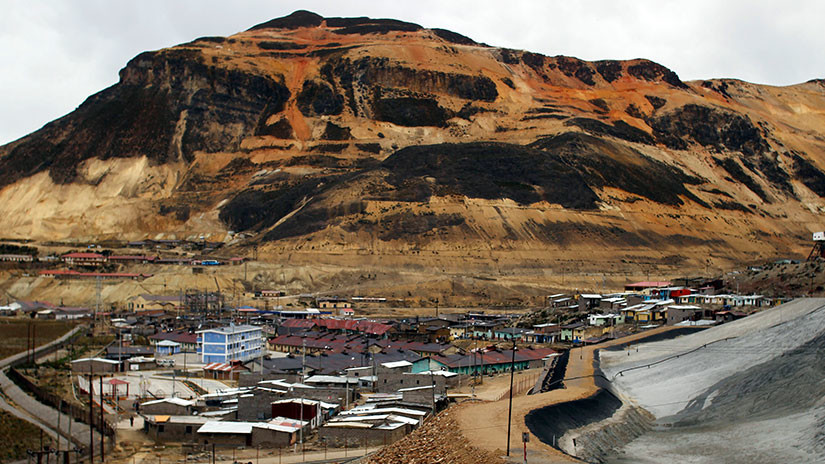
Una vista panorámica de la ciudad minera de Morococha en los Andes, 13 de mayo de 2010./ Pilar Olivares / Reuters

Quellaveco, que será operada en conjunto por el Estado peruano y las empresas Anglo American y Mitsubishi, requerirá una inversión de 5.300 millones de dólares y, según el presidente Vizcarra, generará 10.000 puestos de trabajomientras duren las obras civiles.

En opinión del Gobierno peruano, el proyecto minero cuenta con la validación de la sociedad civil, lo que garantiza que se trata de una iniciativa minera ambientalmente responsable.

Un reporte del diario El Comercio informó que la participación del consorcio japonés Mitsubishi pasó del 18,1% de las acciones a controlar el 40% de las acciones, luego de pagar 600 millones de dólares a Anglo American.

martes, 17 de julio de 2018

Macusani Yellowcake descubre depósito de 2.5 millones de toneladas de litio en Perú


La empresa peruana, subsidiaria de la canadiense Plateau Energy, dijo que el depósito podría convertirse en la mina de litio más grande del mundo.


La compañía peruana Macusani Yellowcake informó hoy que ha descubierto recursos equivalentes a 2.5 millones de toneladas de litio de alta ley y cantidades importantes de uranio durante la exploración del depósito Falchani, en el sur del país.

La empresa, subsidiaria de la canadiense Plateau Energy , dijo que el depósito podría convertirse en la mina de litio más grande del mundo. 

Agregó que hasta el momento han perforado un 15% de la superficie del depósito y que planean explorar 10,000 metros más este año.

miércoles, 4 de julio de 2018

Fiebre del oro ha arrasado grandes extensiones de bosques vírgenes.

En 2015, las imágenes de satélite detectaron una nueva zona deforestada en una reserva indígena en las profundidades del Amazonas.

En cuestión de meses, las autoridades peruanas habían expulsado a los mineros que manejaban la deforestación, una rara victoria en una región donde la fiebre del oro ha arrasado grandes extensiones de bosques vírgenes.

La respuesta rápida fue posible gracias al mejor uso de la tecnología satelital que ahora permite rastrear la deforestación casi en tiempo real, brindando a los gobiernos oportunidades "sin precedentes" para actuar, dijo Matt Finer, autor principal de un artículo sobre la tendencia en el último número de Science.

En lugar de pasar años antes de conocer un nuevo punto caliente de deforestación, las autoridades pueden rastrearlo en semanas o meses, dijo Finer.

"La mayoría de los países tropicales ahora no pueden decir, 'bueno, no teníamos la información o no la teníamos a tiempo'", dijo Finer, especialista en investigación de la organización Amazon Conservation, que detectó el desmonte de 2015 en Perú. Reserva Comunal Amarakaeri.

Los satélites han ido capturando imágenes más frecuentes de los bosques tropicales del mundo con mayor detalle. En los últimos años, los investigadores de la Universidad de Maryland desarrollaron un sistema automático de alerta temprana para notificar a las autoridades la posible pérdida de bosques, dijo Finer.

Los algoritmos pueden filtrar aún más los datos apuntando a patrones particularmente problemáticos, como la pérdida de la cubierta forestal verde dentro de reservas protegidas o líneas que sugieren que se han cortado nuevos caminos a través de la selva primaria, dijo Finer.

Daniel Castillo, el jefe de un equipo en el Ministerio del Ambiente de Perú que usa la tecnología, dijo que enterarse de la deforestación desde el principio puede evitar que se descontrole. Señaló la expansión de la minería de oro ilegal en el sur de Perú que ahora es un impulsor clave de la economía de la región.

"Ahora es mucho más complicado de controlar", dijo Castillo. "Si podemos identificarlo temprano y tomar las medidas correspondientes, se puede controlar".

Las llamadas alertas GLAD (Global Land Analysis & Discovery) desarrolladas en la Universidad de Maryland ahora cubren más de 20 países con bosques tropicales, dijo Finer.

Perú y Brasil también han desarrollado sus propios sistemas de deforestación de alerta temprana adaptados a sus necesidades, agregó Finer.

Castillo dijo que su equipo analiza las alertas de deforestación basadas en imágenes de Landsat tomadas cada ocho a diez días, y pasa tendencias preocupantes a las autoridades de otros ministerios.

"Tenemos todas las herramientas para saber cuándo ocurre este tipo de fenómenos, solo necesitamos una acción efectiva", dijo Castillo.

martes, 5 de junio de 2018

Oro alcanzaria los US$ 1,400


El metal precioso comenzará a repuntar en el último trimestre de este año, para avanzar hacia un promedio de US$ 1,375 la onza a finales del 2019, y podría alcanzar un máximo de US$ 1,400.

El oro no ha registrado ese precio desde el 2013.

Puede que el oro haya cerrado dos meses a la baja, pero se espera que se sacuda el pesimismo y registre un alza en el 2019 a medida que el dólar cae.

El metal precioso comenzará a repuntar en el último trimestre de este año, para avanzar hacia un promedio de US$ 1,375 la onza a finales del 2019, y podría alcanzar un máximo de US$ 1,400, afirmó Bart Melek, jefe global de estrategia de materias primas en TD Securities en Toronto. El oro no ha registrado ese precio desde el 2013.

Afectado por el fortalecimiento del dólar, el metal ha perdido un 5% desde el 11 de abril, para comercializarse en US$ 1,293, a pesar de la crisis política en Italia y la incertidumbre sobre los conflictos en el comercio mundial.

“Con el tiempo, cada vez habrá menos razones para apostar por el dólar, lo que revertirá algunos de los flujos”, dijo Melek, quien es uno de los participantes de la conferencia sobre metales preciosos, que tiene lugar en Singapur esta semana. “Pensamos que a medida que entremos en el 2019, el dólar se debilitará, lo que es un buen combustible para el oro”.

En general se espera que las tasas de interés continúen bajas, con dos o tres alzas más de la Reserva Federal el próximo año, antes de concluir su ciclo de ajuste monetario, afirmó Melek, en una entrevista telefónica el 31 de mayo. Esto, sumado a acciones con valores alineados con el mercado, generará una creciente presión a favor de comprar oro, agregó.

En el corto plazo, no hay razones para pensar que el oro pueda subir mientras el dólar continúe fortaleciéndose, ante la expectativa de dos alzas de tasa de la Fed este año, dijo Melek. Las proyecciones apuntan a un precio promedio de US$ 1,290 en el tercer trimestre y de US$ 1,300 en los tres últimos meses de 2018, afirmó.

Una proyección similar es la de Nicholas Frappell, responsable ejecutivo en ABC Bullion, con sede en Sídney. En el corto plazo, un dólar más fuerte es un factor en contra y creará un escenario “un poco difícil” para el oro, pero el metal terminará el año bastante firme, dijo Frappell, quien también expondrá en la conferencia, en una entrevista el 1 de junio.

“Hacia adelante, las condiciones para el mercado del oro son positivas, a medida que el repunte del dólar se estanca y los factores fiscales comienzan a debilitarlo”, afirmó y agregó que el ciclo de ajuste monetario podría concluir el próximo año.